
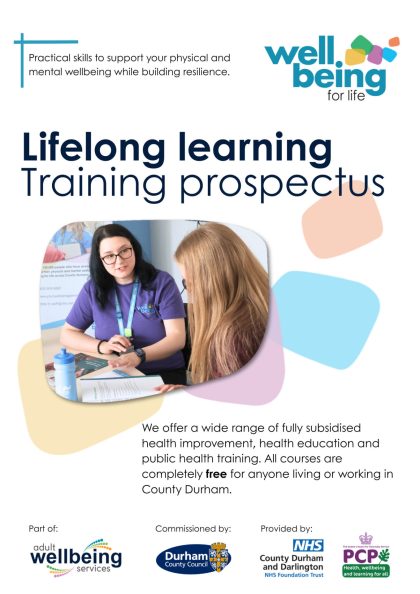
Lifelong learning
Learning new skills can improve your mental wellbeing by boosting your self-confidence, help build a sense of purpose and connect you with others.
Our courses are designed to support you with your awareness in topics that can improve your mental and physical health and range from short 60 or 90 minute workshops to three-day accredited courses.
All our training and awareness sessions are funded by Durham County Council and free to attend for anyone living or working in County Durham.
Our sessions provide you with the opportunity to increase your knowledge and skills in health improvement and community related subjects.
We are able to deliver our sessions in community venues, online, and we can come to you if you have a group of people who would like some training, even at your place of work.
We are also excited to be able to offer our awareness workshops and training in person or online, including evening sessions. All of our training and awareness sessions are funded by Durham County Council and are therefore free to attend for anyone living or working in County Durham.
Training
Our training courses are designed to provide practical skills and valuable insights into maintaining physical health, nurturing mental wellbeing, and building resilience. Whether you’re looking for guidance on stress management, nutrition, or mindfulness, our programs offer the tools to help you thrive in everyday life.
If you cannot see a course listed that you are interested in attending, please contact
cdda-tr.CBS@nhs.net.
Achieving Better Sleep
Good sleep is essential for both mental and physical wellbeing, yet it’s something many of us struggle with. This session explores common barriers to quality sleep and provides practical ideas to help you create healthier sleep habits.
Throughout the session, we explore:
- what constitutes good or restorative sleep
- how to develop daily routines, ahead of bedtime, that work for you
- creating a calm sleep environment for better rest
- building and maintaining habits that support long-term sleep quality
Together, these approaches help support healthier sleep patterns and improved wellbeing in everyday life.
Adult Mental Health First Aid
- the knowledge and skills to spot signs of a person experiencing poor mental health
- the confidence to be able to support themselves and others
- the support to feel empowered and motivated to carry out their role
Adult Mental Health First Aid Refresher
- renewing your skills
- updating your knowledge of mental health support
- giving you the chance to practise applying the Mental Health First Aid action plan
An Insight into Menopause
- what is meant by menopause, perimenopause and early menopause
- who is affected
- the common signs and symptoms
- the range of treatment options available
Assertiveness for Everyday Confidence
(Previously called: Assertiveness Skills)
This practical three-hour session helps you understand what assertiveness really is – and how it differs from passive or aggressive behaviour.
The workshop helps you to:
- build practical assertiveness skills
- communicate clearly
- set healthy boundaries
- handle everyday situations with more confidence
You’ll learn simple techniques to stay respectful, reduce conflict, and feel more in control at work and beyond.
Basic Diabetes Awareness
- early signs and symptoms to be aware of
- how lifestyle choices can influence risk
- key information around prevention
- potential short and long term complications
Basic Mental Health Awareness
(Previously called: Basic Mental Health Awareness Toolbox)
This session provides a clear, easy to understand introduction to mental health and mental wellbeing.
You will learn how to:
- maintain positive mental health
- recognise early signs of poor mental health
- understand common mental health conditions and their symptoms
- challenge common myths and stigma around mental health
- identify and signpost to reliable sources of support and help
This session is suitable for anyone who wants to build their knowledge and understanding of mental health and related conditions.
Challenging Mental Health Stigma and Discrimination
- explain what mental health stigma and discrimination are
- understand and describe the impact of stigma and discrimination, including its wider consequences for individuals and communities
- identify practical ways to challenge stigma and discrimination safely and effectively
- explore key tips for keeping safe and looking after their own wellbeing when challenging stigma and discrimination
Communication Skills for Positive Behaviour Change
(Previously called: Motivational Interviewing and Communication Skills)
This session offers an introduction to communication techniques that encourage positive behaviour change.
You will learn how to:
- use active listening skills to build rapport
- support others to explore their own motivations
- guide conversations that encourage confidence and change
Together, these skills help create supportive conversations that encourage positive behaviour change in a respectful and empowering way.
This course is designed for anyone working in roles that support people to improve their health, wellbeing and quality of life.
Energy Drinks: Caffeine, Sugar and Your Body
(Previously called: Awareness Around Energy Drinks and Caffeine)
This short and informative session introduces:
- what energy drinks are
- the ingredients they typically contain
- the recommended guidelines for both caffeine and sugar intake
It explains how caffeine and sugar affect the body and explores how these substances interact with alcohol, offering practical strategies to help reduce energy drink consumption.
Everyday Movement and Physical Activity
(Previously called: A Fresh Start with Physical Activity)
This friendly, interactive session is ideal for anyone who wants to become more active, or to support others to make healthy physical activity lifestyle changes.
The session focuses on physical activity of all types and at all levels, from everyday movement such as walking, gardening and housework, through to more structured activities. It highlights why even small amounts of movement matter, and explores common barriers that can make getting started or staying active feel challenging.
By the end of the session, you will feel more confident in:
- choosing activities that suit your lifestyle, interests and current ability
- setting realistic and motivating goals
- monitoring your activity levels safely
- developing simple ways to build more movement into everyday routines
- progressing at your own pace
No specialist equipment – or Lycra – required!
Making Every Contact Count (MECC)
- easy practical techniques for starting wellbeing conversations
- understand what helps people make change
- explore trusted resources you can use to signpost others to information on smoking, alcohol, mental health, finances and more
MECC Gambling Harms
- recognise early signs of gambling-related harm
- understand why some gambling products are particularly high risk
- use MECC (Make Every Contact Count) principles to have supportive, non judgemental conversations with confidence
- signpost people to specialist support, encouraging prevention and early intervention
Mental Health Awareness for Line Managers
- recognise signs of poor mental health at work
- start supportive conversations with greater confidence
- reduce stigma within your team
- create a positive and open workplace culture
- understand your role in reducing stress in the workplace and supporting staff wellbeing
- gain awareness of reasonable adjustments and how they can be applied to support staff effectively
Resilience: Tools for Challenging Times
(Previously called: Building Personal Resilience to Change)
This reflective, interactive session will help you to understand the meaning of resilience and how you can apply tools and strategies to strengthen it.
You will explore how to:
- recognise our natural responses to change
- recognise your personal strengths
- focus on what you can and cannot influence
- build healthy coping strategies
- understand the importance of your support networks
The session concludes by bringing these elements together, helping you feel able to maintain your wellbeing and respond positively through challenging times.
Simple Steps to Healthier Eating
(Previously called: Healthy Eating: It’s a Balancing Act)
This session gives simple, clear advice on healthy eating in the UK.
It uses the Eatwell Guide to explain:
- the main food groups
- portion size recommendations
- How to read food labels – including traffic light labels
- simple changes that support long-term wellbeing
It also talks about common challenges people face when trying to eat well, the link with obesity, and easy food swaps that can help improve everyday eating habits.
Stress Awareness
(Previously called: Stress Awareness Toolbox)
This 90-minute session helps you to understand the difference between pressure and stress, how to spot your own early warning signs, and what can trigger stress.
You’ll explore:
- simple, practical ways to reduce day to day pressure and build a sense of balance
- how stress can affect your thoughts, feelings and behaviour, and ways to minimise its negative effects
- basic mindfulness techniques that can be used to manage stress more effectively in everyday situations
Overall, the session helps build awareness of stress and introduces simple techniques to support wellbeing in everyday situations.
Suicide Awareness
- build confidence in talking about suicide in a calm, sensitive and non judgemental way
- increase understanding of suicide, stigma, and why open conversations can make a difference
- help people feel more able to notice when someone may be struggling and to reach out appropriately and supportively
Looking for events, groups or activities near you?
Lifelong learning courses
Developing new skills can boost your self-confidence, create a sense of purpose, and help you connect with others.
Feedback
-
"Great course content. Interesting, very well presented and the chance for some interaction which was very useful. [It] makes the course so much better than just watching a presentation. I will take away some of the information for personal use. I am in a role where I wouldn’t use this professionally, but thank you for […] "
-
"I learned a lot. It will help re-shape my clinical practice and improve my approach towards patients with mental health disorders. "
-
"It was beneficial learning about stress and pressure. I found the 5 ways to wellbeing particularly useful and will continue to practice these every day. "
-
"I was nervous about an upcoming job interview but your support really helped me with stress control and mental resilience. "
-
"It was a great experience and extremely insightful. I feel empowered and ready for any situations I may face. "
-
"The facilitator was very knowledgeable and gave time for reflective discussion –would recommend this to anyone, very beneficial. "
-
"Thank you for the session, it has generated lots of discussion. Some have already tried some of the sleep hygiene suggestions – me included. "
How we've helped
On 11 and 12 November 2025, our Training team delivered a two-day Adult Mental Health First Aid course at Durham County Council. How timely, that the participants’ graduation fell on the very first Mental Health First Aider day in England. Amazingly, we had ten graduations from this course – meaning there is now ten more people...

Lifelong learning resources
-
 Useful linkPCP is a leading third sector organisation working in the North East, with a focus on health improvement and reducing health inequalities through building capacity and life...
 -
-
 Useful linkDurham Community Action’s work is divided into 5 main themes –helping communities, promoting better health, supporting volunteering, enabling enterprise and getting voices heard.
 -
 Useful linkAdvice in County Durham makes it easier for you to access the right advice and support. Whether you are an individual looking for help and advice or...
 -
 Useful linkThe NHS has launched a free health and wellbeing quiz. Assess your lifestyle, get a score, and be signposted to the NHS tools and content to help...

Brought to you by Wellbeing for life
Offering advice and training to support behaviour change and improve health, wellbeing and learning opportunities.
